
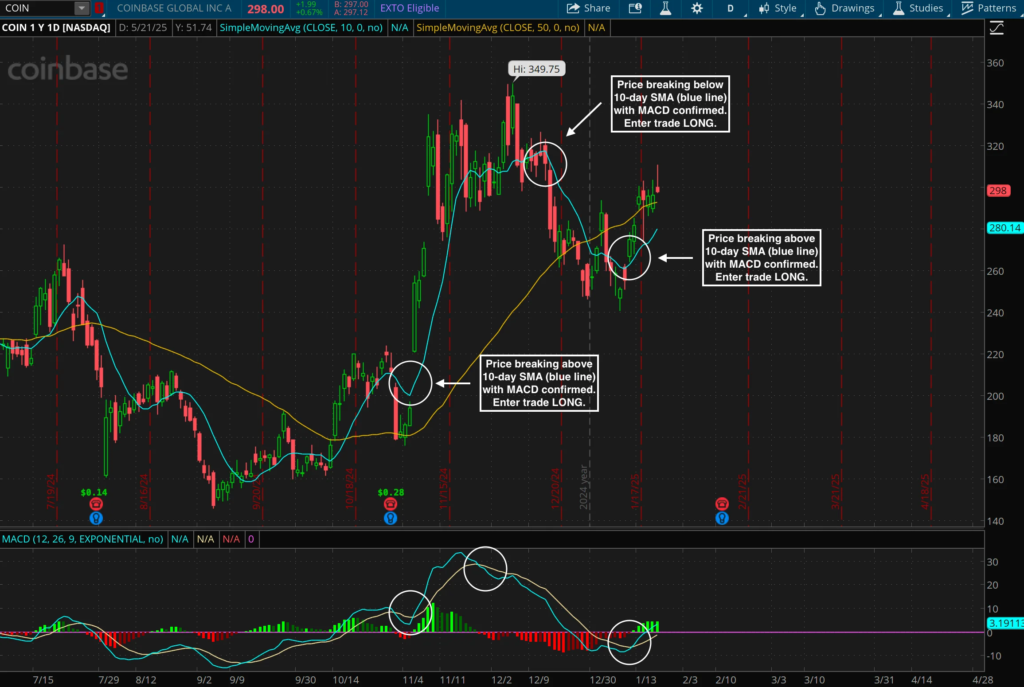
Definition of Active Trading
Active trading is the act of buying and selling securities based on short-term movements with the goal of making a quick profit. This is in contrast to passive investing, where the approach is buy and hold over the long term. Traders often use a multitude of tools and strategies, which include but are not limited to fundamental, quantitative, and technical analysis. Some traders also focus on market news and events. The primary goal of active trading is to profit from short-term market movements.
Additionally, active traders may trade a variety of financial instruments such as stocks, bonds, currencies, and commodities. They may also use options, futures, and derivatives to hedge their positions or increase potential returns. As it pertains to active trading strategies, there are four common approaches. They are scalping, day trading, swing trading, and position trading
Key Takeaways
- Active trading involves buying and selling securities based on short-term movements to make quick profits.
- Scalping focuses on profiting from small price changes, holding positions for seconds or minutes.
- Day trading occurs within a single day, with positions opened and closed by market close.
- Swing traders hold positions from days to months, focusing on technical analysis to find entry and exit points.
- Position trading seeks to profit from major trends, holding positions for months or even years.
Scalping: Capturing Quick Gains in the Market
Scalping involves profiting from small price movements in a security. Scalpers generally hold a trading position for a very short period of time, ranging from a few seconds to a few minutes, and they aim to generate gains from small price fluctuations.
Traders who use the scalping approach have to consider the transaction fees and the bid-ask spreads. Because of the frequency of the trades that the scalper makes, these costs can be considerable if not managed efficiently. Additionally, scalping requires quick decision-making, focus, and discipline as scalpers must be able to enter and exit positions quickly in order to take advantage of small price movements

Day Trading: Mastering the Art of Intraday Opportunities
Day trading is a short-term trading strategy whereby securities are bought and sold within the same trading day. Day traders aim to profit from price movements in a security and typically close all of their positions by the close of the market trading day.
The general public often associates day trading with individual investors who work from home or a small office and use their own capital to trade securities. However, day traders also work for large financial institutions such as banks, brokerage firms, and hedge funds
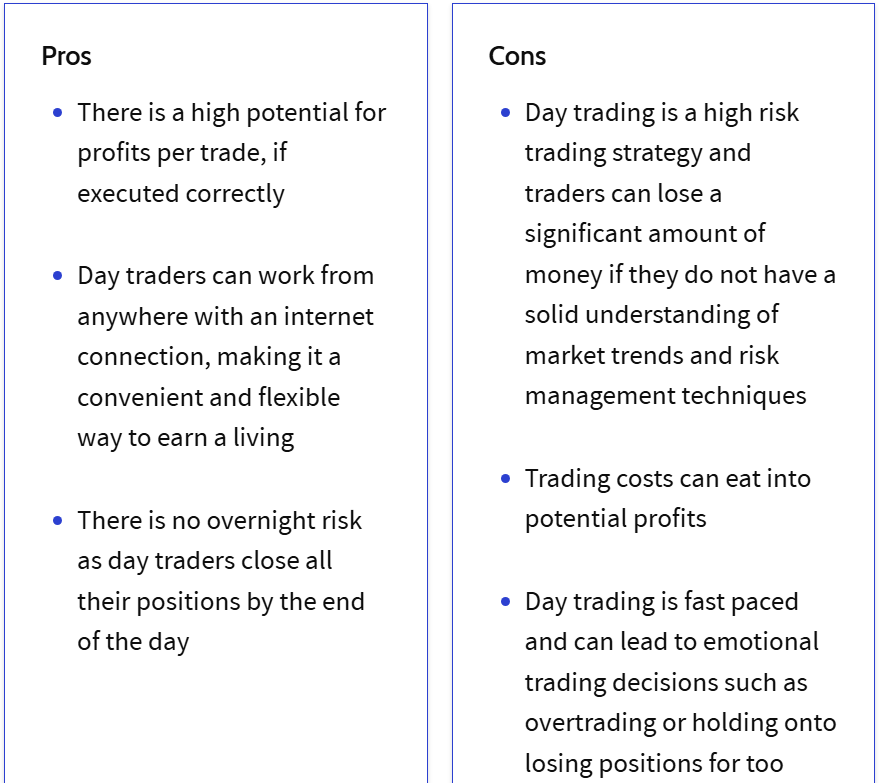
Swing Trading: Profiting From Short to Intermediate Market Moves
This approach involves buying and holding securities for a short period of time, usually from a few days to a few months. The goal of swing trading is to gain from short-term price movements in the market, buying when prices are low and selling when prices are high.
Swing traders have to manage sudden and unexpected moves in the market, which can lead to losses. They have to stay informed about market trends and news. Additionally, swing traders need to have strong risk management skills and discipline to stick to their trading plan and avoid emotional trading decisions
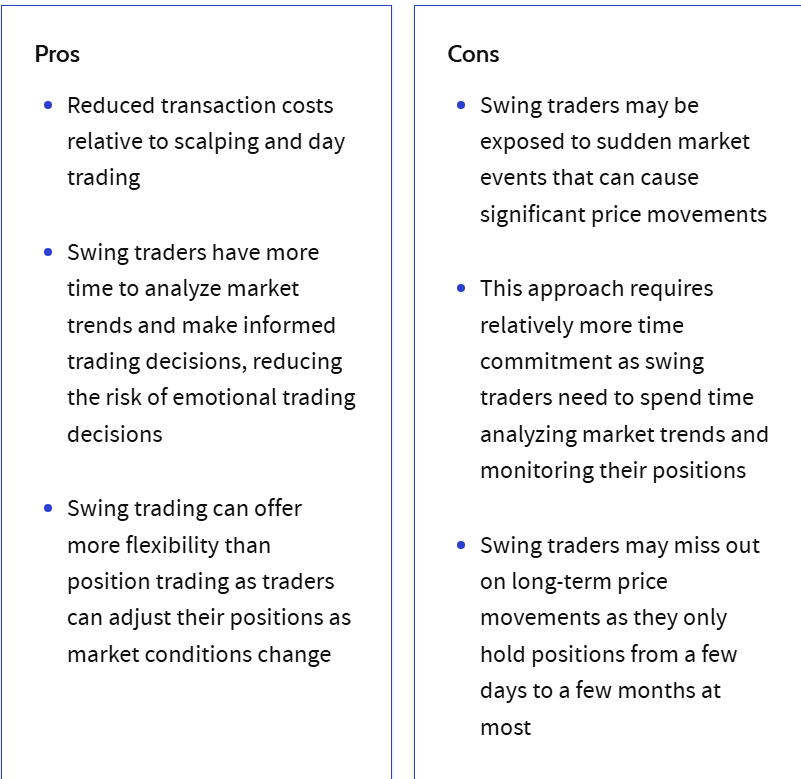
Position Trading: Long-Haul Strategy for Major Market Gains
This approach entails holding positions in securities for an extended period, usually from several months to years or even decades. The objective of position trading is to profit from major trends in the market rather than short-term price movements. Position trading is less active than scalping, day trading, and swing trading. Institutions typically allocate a portion of their trading book to this approach.
Generally position traders use fundamental analysis to identify securities that are undervalued or overvalued and hold these positions for the long term, waiting for the market to correct itself. Position traders may also use technical analysis to identify optimal entry and exit points
Pros
- Position trading can offer higher potential gains than the other active trading strategies as traders aim to profit from long term price movements
- There are fewer transaction costs due to the infrequency of trading
- Position traders can be more flexible in their trading strategy as they can adjust their positions as market conditions change
- With this approach there is more time to analyze market trends and make informed trading decisions, reducing the risk of emotional trades
Cons
- Position traders may be exposed to sudden market events that can cause large price movements
- This approach may limit the traders ability to take advantage of short term market opportunities
- Holding positions for an extended period can limit the trader’s liquidity, making it difficult to add new positions
- Position traders must have a solid risk management plan to manage their positions and limit their exposure to market risk
The Benefits of Engaging in Active Trading
There are several reasons why individuals and entities consider active trading strategies. These include:
- High return potential: There is a potential for higher returns when compared to passive investment strategies. By actively monitoring the market and making informed decisions, traders can take advantage of short-term price movements and profit from market volatility.
- Flexibility: Traders can adjust their trading strategies to take advantage of changing market conditions and adapt their strategies based on their risk tolerance.
- Control: Active traders have greater control over their investment decisions compared to passive investors. They can choose entry and exit points, set stop loss and profit levels, and manage their risk exposures.
Challenges and Limitations of Active Trading Strategies
Individuals and entities should be aware of the limitations of active trading. These limitations include:
- High risk: There is a higher level of risk involved relative to passive investing strategies. Traders must be able to manage their risk effectively and have a solid understanding of risk management concepts and techniques.
- Time and effort: Active trading requires an enormous amount of time and effort. Traders must monitor the market and make informed decisions, which can be time-consuming and stressful.
- Transaction costs: Because of the increased frequency of trading, there will be a larger amount of transaction costs, commissions, and fees associated with this approach.
- Emotional stress: Active trading can be emotionally stressful, particularly during periods of market volatility.
- Tax implications: Short-term capital gains taxes can occur through the short-term profits generated by active trading.
How Do I Start Active Trading?
To be an active trader, one would require a solid understanding of the financial markets, trading strategies, and risk management techniques. To get to this point, one must first learn the basics of financial markets and trading. Then, choose a trading strategy such as scalping, day trading, swing trading, or position trading. Next, develop a trading plan. After that, one should choose a broker and practice trading and the trading strategy on a model account. Finall,y one should then execute the trading strategy live.

Is Day Trading Profitable?
Day trading can be profitable, but profitability is not guaranteed. Successful day traders have a solid understanding of market trends, technical analysis, and risk management. They also have the discipline and focus to execute their trading plan consistently over time. Traders should carefully weigh the benefits against the risks and limitations of day trading.
How Do I Swing Trade?
Firstly, one must learn the basics of swing trading. This involves understanding the concept of swing highs and lows, identifying trends, and using technical indicators to analyze the market. Then one should choose a market to trade, such as stocks, currencies, or futures. After that, one should develop a trading plan and analyze the respective market with that trading plan. Technical analysis is often used to find swing highs and lows, trend lines, as well as support and resistance levels.
When potential trading opportunities are identified, one should enter the trade based on the trading plan. Stop loss and profit levels should be set to manage risk and reward. The positions should be monitored and adjusted if necessary based on market conditions. Finally, post-trader analysis should be done to refine one’s approach to swing trading.
The Bottom Line
Active trading strategies refer to short-term trading strategies that involve buying and selling securities frequently to take advantage of short-term price movements in the market. Scalping is the most aggressive form of active trading and involves making trades in a matter of seconds or minutes to profit from small price movements.
Day trading is another form of active trading that involves holding positions for a single day to profit from short-term price movements, while swing trading involves holding positions for several days to a few months to profit from intermediate price trends. Position trading, on the other hand, involves holding positions for an extended period of time, usually several months or longer, to profit from major price trends in the market.
While all active trading strategies have the potential for profit, they are also associated with significant risks, including high transaction costs, volatility, and emotional trading decisions. Traders who engage in these strategies must have a solid understanding of market trends, technical analysis, and risk management techniques to succeed.