
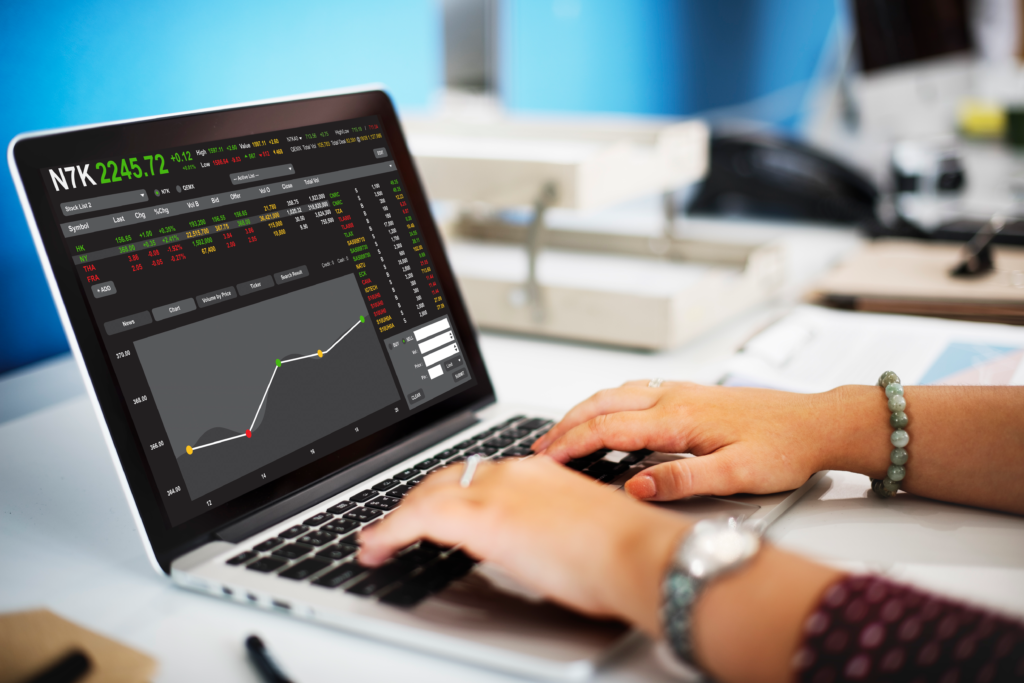

What Is a Day Trader?
Day traders engage in frequent, high-volume trading strategies, aiming to profit from brief price variations within the same day. Leveraging short-term market movements, they trade multiple positions that they typically close before the day’s end to avoid overnight risks. With a focus on price action, rather than long-term growth potential, day trading demands a high level of skill and quick decision-making. While potentially lucrative, it involves significant risk due to the volatile nature of short-term price swings.
Key Takeaways
- Day traders aim to profit from short-term price movements by executing a high volume of trades within the same day.
- Techniques used by day traders include trading the news, fading the gap, and assessing market direction to buy or short securities.
- Strategies like scalping and high-frequency trading leverage small price changes and short-term market inefficiencies.
- Day trading offers opportunities for profit but includes high risk, especially when using leverage or engaging in short-selling.
- Successful day trading requires extensive knowledge, discipline, and real-time decision-making due to its fast-paced nature.
Deep Dive Into Day Trading Practices
There is no special qualification required to become a day trader. Instead, day traders are classified based on the frequency of their trading. The Financial Industry Regulatory Authority (FINRA) and U.S. Securities and Exchange Commission classify day traders based on whether they trade four or more times during a five-day span, provided the number of day trades is more than 6% of the customer’s total trading activity during that period or the brokerage/investment firm where they have opened an account considers them a day trader.
Day traders usually close all trades before the market closes to avoid holding open positions overnight. Their effectiveness can be limited by the bid-ask spread, trading commissions, and expenses for real-time news and analytics software. Successful day trading requires extensive knowledge and experience. Day traders employ a variety of methods to make trading decisions. Some traders employ computer trading models that use technical analysis to calculate favorable probabilities, while some trade on their instinct.
Unveiling the Pattern Day Trader Status
A pattern day trader (PDT) is a regulatory designation for those traders or investors that execute four or more day trades over the span of five business days using a margin account.
The number of day trades must constitute more than 6% of the margin account’s total trade activity during that five-day window. If this occurs, the trader’s account will be flagged as a PDT by their broker. The PDT designation restricts further trading to discourage excessive trading
Mastering Techniques for Day Trading Success
Day traders are attuned to events that cause short-term market moves. Trading the news is a popular technique. Scheduled announcements such as economic statistics, corporate earnings, or interest rates are subject to market expectations and market psychology. Markets react with sudden, significant moves when expectations are not met or exceeded, benefitting day traders.
Another trading method is known as fading the gap at the open. When the opening price shows a gap from the previous day’s close, taking a position in the opposite direction of the gap is known as fading the gap. On days without news or gaps, day traders assess the market’s general direction early in the morning.
If they expect the market to move up, they would buy securities that exhibit strength when their prices dip. If the market is trending down, they would short securities that exhibit weakness when their prices bounce.
Most independent day traders have short days, working two to five hours per day. Often they will practice making simulated trades for several months before beginning to make live trades. They track their successes and failures versus the market, aiming to learn by experience.
Proven Strategies for Day Traders
Day traders use several intraday strategies. These may include:
Scalping: This strategy aims for many small profits from minor price changes each day and may include spotting short-lived arbitrage opportunities.
Range trading: this strategy primarily uses support and resistance levels to determine buy and sell decisions. This trading style may also go by the name swing trading if positions are held for weeks rather than hours or days.
News-based trading: this strategy typically seizes trading opportunities from the heightened volatility around news events and headlines.
High-frequency trading (HFT): these strategies use sophisticated algorithms to exploit small or short-term market inefficiencies up to several thousand times in a single day.
Weighing the Pros and Cons of Day Trading
No Overnight Moves
The main benefit of day trading is avoiding the impact of negative overnight news on security prices. Such news includes vital economic and earnings reports, as well as broker upgrades and downgrades that occur either before the market opens or after the market closes.
Higher Margins and Easier Exits
Another advantage is the ability to use tight stop-loss orders—the act of raising a stop price to minimize losses from a long position. Another includes the increased access to margin—and hence, greater leverage. Day trading also provides traders with more learning opportunities.
Higher Costs
Intraday traders may have insufficient time for a position to see a profit. Frequent trading results in higher commission costs, reducing potential profit margins.
Higher Risks
Day traders that engage in short selling or use margin to leverage long positions can see losses amplify quickly, leading to margin calls.
Pros
- Positions are usually closed at the end of each day, and are so unaffected by risk from overnight news or off-hours broker moves.
- Tight stop-loss orders can protect positions from extreme movements.
- Regular traders have access to increased leverage and lower commissions.
- Numerous trades increase hands-on learning experience.
Cons
- Frequent trades do mean multiple commission costs.
- Some assets are off-limits, like mutual funds.
- There may not be sufficient time for a position to realize a profit before it has to be closed out.
- Losses can mount quickly, especially if margin is used to finance purchases. Margin calls are a real risk.
Comparing Day Trading to Other Trading Strategies
Day trading is one of several strategies for professional stock traders. Unlike other traders, they look for predictable price patterns and small corrections over the course of a single trading day. Although the profits are relatively small, they can accumulate over a long-enough time frame. Day traders typically close out their positions at the end of the trading day, reducing their exposure to swings in the overseas markets.
In contrast, swing traders try to anticipate the peaks and troughs of a stock’s price movements over a longer time frame, often weeks or months. With the right strategy, swing traders can earn higher profits than intraday traders, but they have to spend more time looking for suitable stocks.
Similar to swing traders, trend traders examine a stock’s momentum and moving averages to determine whether a stock is likely to move higher or lower. They then buy stocks with a strong upside, or short those likely to trend lower. Trend traders are likely to look for chart patterns or technical indicators in their forecasts.
Steps to Launch Your Day Trading Career
Becoming a successful day trader requires a great deal of personal discipline. Novice day traders should expect to lose money as they learn the ins and outs of the market and be psychologically prepared for further losses over the course of their careers.
Day trading also involves a great deal of research, not only into the fees and commissions of the broker on their trades but also the relevant taxes and regulations. For example, day traders should be cognizant of the wash sale rule, which prohibits repeated transactions of the same security within a 30-day period. They should also fully understand the risks, especially of trading on margin.
Can You Get Rich Day Trading?
While some day traders can make money, studies suggest that the majority either lose money or underperform the market. Studies by professional economists suggest that most day trading strategies are no more effective than random chance.
What Are the Tax Implications of Day Trading?
Intraday trades are considered short-term capital gains, meaning that they are taxed at the same level as your income. You are required to pay taxes on each profitable trade, but you can use your losing trades to offset the taxes on your gains. You can also use up to $3,000 of losses to offset income tax on your salary, and carry over additional losses to the next tax year.
How Much Can I Make Day Trading?
While most day traders lose money, there are day traders who can make a profit. Zippia estimates that the average income of successful day traders is about $117,000 per year, or about $56 per hour.
However, there are also risks—solo day traders must also trade with their own money, which comes with much greater risk than an ordinary salary.